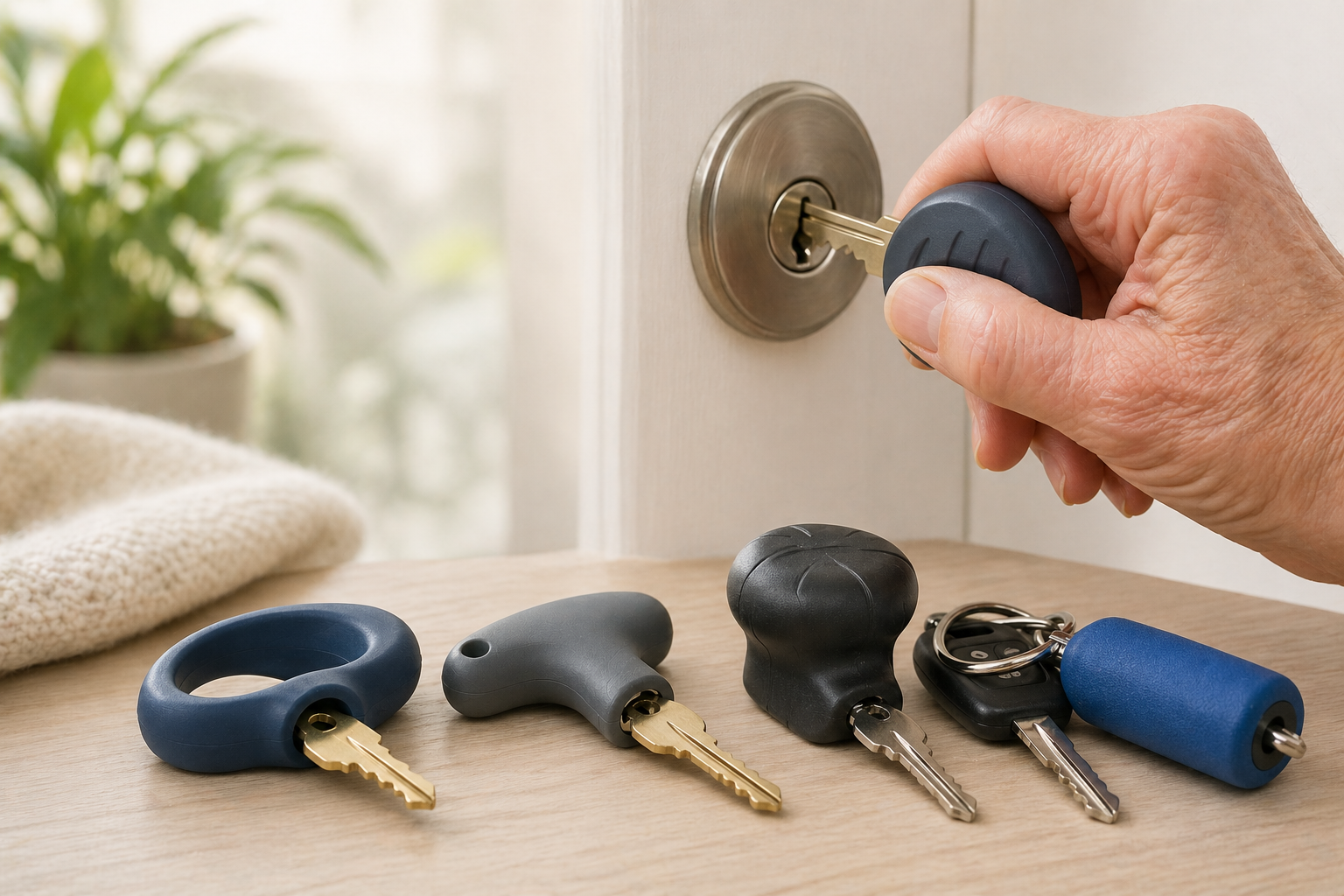
Turning keys becomes unexpectedly difficult for individuals with arthritis, reduced hand strength, or conditions affecting finger dexterity and grip. The small surface area of standard keys combined with the twisting force required to operate locks creates significant challenges for seniors with stiff joints, hand pain, or muscle weakness. What was once an automatic action can become a frustrating barrier to independence, forcing individuals to wait for assistance or avoid leaving home entirely.
Key turners are specialized assistive devices designed to provide leverage and enlarged gripping surfaces that compensate for limited hand strength and dexterity. These tools attach to existing keys or replace standard key heads with larger, easier-to-grip alternatives that reduce the force needed to turn locks. The best key turners for arthritic hands combine ergonomic handles with secure key attachment methods and durable construction that withstands daily use.
For seniors maintaining independent living, caregivers supporting aging loved ones, and individuals recovering from conditions affecting hand function, choosing the right key turner means evaluating factors like grip size, leverage design, attachment method, and whether the tool accommodates multiple key types. These products serve not only those with diagnosed arthritis but also anyone experiencing age-related grip decline, recovering from hand surgery, stroke survivors with one-sided weakness, or individuals managing neurological conditions that affect coordination.
Key turners work alongside other arthritis-friendly daily living aids like no-tie shoelaces and electric can openers to reduce hand strain throughout the day.
This guide examines the best key turners for arthritic hands, focusing on products specifically beneficial for individuals with arthritis and weak grip. Each recommendation includes details on handle design, key compatibility, leverage advantage, and who benefits most from specific construction characteristics.
We also recommend checking out our guide on the Best Button Hooks for Arthritis and Limited Dexterity.
Table of Contents
As an Amazon Associate, we may earn a commission from qualifying purchases at no additional cost to you.
Best Key Turners for Arthritic Hands and Weak Grip
1. Ableware Arthritis Key Holder and Turner

The Ableware Arthritis Key Holder features a unique triangular cross-section design that naturally prevents the tool from rotating in the hand during key turning. This triangular shape provides three distinct gripping surfaces, allowing users to find the most comfortable grip angle, while the geometry prevents slipping that occurs with round handles. The design is particularly beneficial for individuals with tremors or reduced hand sensation who struggle to maintain consistent tool control with cylindrical handles.
In addition to being one of the best key turners for arthritic hands, this product also works exceptionally well for seniors with Parkinson’s disease, essential tremor, or stroke recovery affecting fine motor control. The triangular shape provides tactile feedback about tool orientation, which benefits users with reduced proprioception or those who cannot see their hands clearly due to vision impairments. The flat gripping surfaces create more surface contact area than round handles, reducing the grip strength needed to prevent rotation during use.
This natural pushing motion is similar to the mechanics used in long-handled shoe horns, which also reduce bending and hand strain.
The key attachment mechanism uses a split-ring design similar to standard keychains, allowing easy addition and removal of keys without tools. This flexibility serves individuals who need to carry multiple keys on the same turner or who frequently add and remove keys for different properties or vehicles. The split ring is made from stainless steel with a reinforced opening that maintains its spring tension through thousands of uses.
The handle measures approximately 2 inches in width across the flat surfaces, providing an adequate gripping area for most hand sizes. The length extends about 2.5 inches, offering a leverage advantage without excessive bulk. The handle is made from lightweight aluminum with an anodized finish that resists scratching and maintains appearance through daily pocket or purse carry. The total weight, including the handle and split ring, is less than one ounce.
The Ableware turner comes in multiple bright colors, including red, blue, and yellow, which helps seniors with vision impairments locate keys in purses, bags, or on countertops. The high-contrast colors also make dropped keys easier to find against floors, grass, or pavement. The color coding serves households where multiple family members need key turners, allowing each person to identify their keys quickly.
The compact size makes this turner suitable for carrying on keychains with multiple keys, fitting easily in pockets without creating bulges or discomfort. For seniors who need to carry keys regularly for home, car, mailbox, and other access points, this lightweight design provides essential assistance without the burden of heavy or bulky equipment. The triangular shape also prevents keys from twisting and tangling in pockets or purses, a common frustration with standard keychain arrangements.
2. Dext Keywing Key Turner Aid – Award-Winning Design for Arthritis

The Dext Keywing Key Turner is an award-winning assistive device that won the Design Council UK Spark Award and received £65,000 in funding from the charity Versus Arthritis. This click-on design features a comfortable dimpled dome cap that creates a thumb-turn mechanism, eliminating the need for pinching and providing extra leverage so that less strength is required to hold and turn keys. The distinctive dome shape serves individuals with arthritis, Parkinson’s disease, tremors, and general hand weakness.
This product works exceptionally well for seniors whose primary challenge is the pinching motion required with standard keys. The Keywing transforms flat Yale-style keys into comfortable thumb-operated turners, allowing users to apply rotational force through their thumb pressing on the large dome surface rather than gripping small key heads between fingers. This natural pressing motion causes significantly less joint stress than traditional key operation.
The key attachment uses a simple click-on mechanism that snaps onto the key head and holds securely without tools or complex installation. The attachment works specifically with flat Yale-style cylinder rim lock keys with key heads measuring 5mm or greater in diameter. Once attached, the Keywing becomes a permanent addition to the key, eliminating the need for repeated installation and removal. The lightweight nylon construction adds minimal weight to keychains while providing substantial grip improvement.
The dimpled dome surface provides tactile grip points that increase control and prevent the key from slipping during turning motions. The textured surface works effectively even when hands are wet, sweaty, or covered in lotion—conditions that make standard keys nearly impossible to grip for individuals with reduced hand strength. The dome measures approximately 1 inch in diameter, providing adequate surface area for comfortable thumb contact without creating excessive bulk.
The Keywing is available in a multipack of three units in vibrant colors, including red, blue, and yellow. The bright color-coding system removes the frustration of guessing which key is which, helping seniors with vision impairments or memory concerns quickly identify home keys, mailbox keys, and other frequently used keys. The color distinction is particularly valuable in low-light conditions or when fumbling through multiple keys while carrying groceries or packages.
The nylon body creates a warm touch point that’s more comfortable than cold metal keys in winter weather. This temperature insulation benefits seniors with circulation issues or those sensitive to cold who struggle with frozen metal keys during outdoor lock operation. The material is durable and withstands drops, pocket carry, and daily handling without cracking or degrading.
The Keywing design was created by Geoff to help his father manage keys despite arthritis limitations. All Dext products are manufactured in the United Kingdom in accordance with quality control and safety standards, ensuring customers receive high-quality, consistently produced assistive devices. The award recognition and charity funding validate the design’s effectiveness for the arthritis community. The Keywing’s award-winning design philosophy mirrors other highly-rated assistive devices for arthritis that prioritize user testing and real-world effectiveness.
For individuals who primarily use Yale-style flat keys and who benefit from thumb-operated turning rather than finger gripping, this award-winning design is one of the best key turners for arthritic hands, with proven assistance backed by both design awards and charitable organization endorsement. The click-on simplicity and permanent attachment make it ideal for seniors who struggle with tool-based installation or who need hassle-free daily key operation.
3. Fanwer Folding Key Turner and Organizer for Arthritis

The Fanwer Folding Key Turner is a multi-key organizer design that holds two keys in a compact folding mechanism, similar to a Swiss Army knife configuration. This space-saving design consolidates multiple keys into a single, organized unit while providing ergonomic handle surfaces that make turning easier for individuals with a weak grip, making it one of the best key turners for arthritic hands. When not in use, the keys fold into the handle for safe, compact storage that prevents keys from catching on pocket linings or tangling with other items.
This product works exceptionally well for individuals who need to manage multiple keys from home, mailbox, front and back doors, or residence and storage unit, without carrying bulky separate turners for each key. The folding design eliminates the clutter and confusion of multiple loose keys or separate assistive devices. The organized configuration benefits seniors with memory concerns who struggle to identify which key opens which lock, as the folding mechanism keeps keys in consistent positions.
The handle features an enlarged grip surface that provides a leverage advantage when keys are deployed for use. The ergonomic shaping reduces the force needed to turn locks compared to standard keys, making it accessible for individuals with moderate arthritis or hand weakness. The handle measures approximately 3 inches in length when folded, providing a comfortable palm grip without excessive bulk that would make pocket carrying uncomfortable.
The key attachment mechanism uses a securing lever system that locks keys in place and allows easy addition or removal without tools. Keys slide into designated slots and secure with small fastening tabs that can be operated with limited finger strength. The system accommodates standard Yale-style flat keys commonly used for residential door locks, though it may not fit all key types, including some automotive or specialized keys.
The handle is made from lightweight aluminum alloy with a smooth finish that won’t scratch hands during use or catch on fabric when carried in pockets. The material provides durability that withstands daily pocket carry, drops, and repeated folding and unfolding cycles. The total weight with two keys attached is approximately 1.5 ounces, light enough not to burden pockets but substantial enough to provide a stable feel during use.
When deployed for use, each key swings out perpendicular to the handle, creating a T-shaped configuration that provides excellent leverage for turning. This perpendicular orientation allows users to apply rotational force through natural wrist motion rather than requiring finger twisting. The keys lock into the open position during use, preventing them from folding back unexpectedly during lock operation.
The folding mechanism includes smooth pivot points that operate without binding or requiring excessive force. Seniors with limited finger strength can deploy and fold keys using single-handed operation, which benefits stroke survivors or those with one-sided weakness. The compact folded state measures approximately 3 by 1 inches, fitting easily in front pockets, purses, or small organizer pouches.
The Fanwer design is particularly suitable for renters who need keys for apartment entry, mailbox access, and perhaps a storage locker; the common scenario where 2-3 keys serve most daily needs. The organized system prevents the frustration of fumbling through loose keys while carrying packages or groceries. For individuals who value organization alongside ergonomic assistance and who can benefit from consolidated key management, this folding design provides practical advantages beyond simple leverage improvement.
4. Makihoma 3-Key Folding Key Turner with Extended Handle

The Makihoma 3-Key Folding Key Turner features an extended handle design that folds out to approximately 4.9 inches (12.4 cm) in length, providing substantial leverage that reduces the force required to turn stiff locks by approximately 70 percent compared to standard keys. This folding mechanism allows the tool to collapse into a compact size for carrying while deploying to full leverage when needed for lock operation. The extended length serves individuals with severe hand weakness, those operating difficult locks with stiff mechanisms, or seniors who need maximum leverage assistance.
This product is the best key turners for arthritic hands dealing with older locks in historic homes or apartments, locks that have become stiff with age or weather exposure, or high-security locks with heavy spring mechanisms. The extended leverage also serves individuals with extremely limited hand strength who cannot operate locks even with standard-length key turners. The folding design means users get maximum leverage advantage when deployed without the carrying burden of a permanently extended tool.
The turner holds three separate keys in designated slots, allowing management of multiple frequently used keys on a single device. This consolidation benefits seniors who access home, mailbox, and storage unit locks regularly, eliminating the need to carry multiple separate turners or swap keys between uses. The three-key capacity accommodates the typical residential key needs—front door, back door, and mailbox or storage—without requiring a large keychain full of separate devices.
The handle features ergonomic shaping with finger contours that guide natural hand placement and provide a comfortable grip during the turning motion. When deployed, the handle creates a T-shaped lever configuration that allows users to apply rotational force through natural wrist movement rather than finger twisting. This lever action engages larger arm muscles instead of relying solely on hand strength, making lock operation accessible even for users with significant weakness.
The key attachment mechanism uses a folding knife-style design where each key pivots on a central pin and locks into position when deployed. The keys fold out individually, allowing users to access the specific key needed while keeping others tucked away. This individual deployment prevents the bulk and tangling that occurs when multiple keys extend simultaneously. The pivot mechanism operates smoothly without requiring excessive force, making it accessible for seniors with limited finger strength.
The body is made from durable plastic and metal construction that withstands daily pocket carry, drops, and repeated folding cycles. The material resists scratching and maintains its appearance through extended use. When folded, the entire unit measures compact enough to fit comfortably in front pockets without creating bulges or discomfort. The weight with three keys attached is approximately 2 ounces, providing substantial feel during use while remaining light enough for comfortable all-day carry.
The extended handle position provides optimal leverage for turning stubborn locks that resist operation with standard keys or shorter turners. The folding design means seniors can keep the turner in their pocket or purse throughout the day without the inconvenience of a permanently extended handle, deploying the full length only when approaching locks. This versatility serves users who need maximum leverage for home entry but want compact portability for daily carrying.
The Makihoma turner is particularly suitable for individuals managing multiple properties, those in cold climates where outdoor locks freeze and become stiff, or seniors whose hand strength has declined to the point where even moderately resistant locks become barriers to access. The three-key capacity with extended leverage provides both organizational convenience and mechanical advantage in a single ergonomic package. For individuals who need substantial leverage assistance combined with multi-key management, this folding extended-handle design provides professional-grade performance in a portable format.
5. SP Ableware Hole-in-One Key Turner with Finger Hole Design

The SP Ableware Hole-in-One Key Turner features a unique design with a large central finger hole that allows users to grip the tool in multiple ways depending on their hand capabilities. Users can insert fingers through the hollow center for maximum leverage, grip around the outside perimeter for traditional handling, or use any combination that feels comfortable. This versatility makes the tool accessible for individuals with varying types of hand limitations, from severe weakness to coordination difficulties.
This product is one of the best key turners for arthritic hands that need flexibility in gripping methods because their hand function varies throughout the day or because different locks require different force applications. The central hole design serves individuals who cannot form a traditional grip but can hook fingers through openings, such as those with severe arthritis causing finger contractures. The multiple gripping options also benefit users experimenting to find the most comfortable and effective method for their specific limitations.
The handle measures 5 inches (12.7 cm) in length, providing substantial leverage that reduces the force needed to turn locks significantly. The extended length amplifies even small amounts of applied force into sufficient torque for operating stiff or resistant locks. The curved ergonomic shape follows natural hand contours, and the tool can be grasped from multiple angles depending on which gripping method the user employs.
The key attachment mechanism uses a binding post system where one or two keys fit into designated slots and are secured with a single screw. The screw tightens with minimal force required, making key installation accessible for most users, though some reviewers note the screw may require periodic retightening with regular use. When not in use, attached keys fold toward the inner curved side of the holder, creating a compact storage configuration that prevents keys from catching on pocket linings.
The handle is made from bright yellow neon plastic that provides high visibility, helping seniors locate keys on countertops, in purses, or dropped on floors. The color serves individuals with vision impairments who struggle to find small objects against varied backgrounds. The durable plastic construction withstands drops and daily handling without cracking, and the material maintains its properties across temperature ranges.
The tool accommodates standard house door keys as well as most car keys that don’t have bulky plastic head covers. The slots accept keys with round holes at the top, though some key types with unusual head shapes may not fit the attachment mechanism. The two-key capacity serves typical residential needs—home and mailbox, or front and back door—without requiring multiple separate devices.
The design includes a hole for attaching wrist straps, key chains, key rings, or for hanging on hooks near entryways. This attachment point allows seniors to connect the turner to lanyards for neck wearing, carabiner clips for belt attachment, or traditional keychain rings. The lightweight construction makes lanyard carrying comfortable for all-day wear, ensuring keys remain accessible without requiring pocket or purse storage.
The SP Ableware turner is made in the USA by Ableware, a manufacturer recognized as the largest in the United States for Aids for Daily Living (ADL). The company specializes in home healthcare and rehabilitation products designed to increase mobility, maximize independence, and enable dignified living. The professional-grade construction and thoughtful design reflect this focus on genuine user needs rather than cosmetic appeal.
For individuals who need maximum gripping versatility, substantial leverage advantage, or who benefit from being able to experiment with different hand positions to find what works best, this finger-hole design provides unique advantages. The ability to grip through the center hole serves users whose hand limitations make traditional peripheral gripping impossible, opening key operation to individuals who might otherwise require complete assistance.
How to Choose One of the Best Key Turners for Arthritic Hands
Selecting one of the best key turners for arthritic hands requires understanding the individual’s specific grip limitations, pain locations, and daily key usage patterns. Different turner designs serve different functional capabilities and use cases, and matching these factors ensures the chosen tool genuinely improves independence rather than creating new frustrations.
Grip Strength and Hand Function Level
Individuals with severe arthritis or those who cannot form any grip benefit most from jumbo or oversized turners that allow palm gripping or two-handed operation. These extra-large designs eliminate the need for finger dexterity entirely, relying instead on gross motor movements. Users who maintain some grip capability but experience pain with small objects should choose built-up foam handles or mid-size ergonomic designs that provide a comfortable diameter without excessive bulk.
Seniors with mild arthritis or early-stage grip decline can use compact turners with moderate handle enlargement. These individuals benefit primarily from the leverage advantage and slightly larger grip surface rather than needing maximum diameter handles. Understanding where hand function fails, whether from weakness, pain, deformity, or coordination issues, determines which handle size and style provides appropriate support.
Seniors with tremors from Parkinson’s disease or essential tremor may also benefit from weighted utensils that use similar stabilization principles for eating tasks.
Pain Location and Arthritis Type
Individuals with thumb base arthritis (CMC joint) benefit from designs that don’t require thumb opposition or pinching. Palm-grip turners or those with finger grooves that distribute force away from the thumb are among the best key turners for arthritic hands in these situations. Seniors with finger joint arthritis need cushioned handles that don’t create pressure points on sensitive knuckles. Those with wrist arthritis benefit from extended-leverage designs that reduce the rotational force needed, minimizing wrist strain.
Understanding which specific joints cause pain during key turning helps identify features that address those limitations. The goal is shifting force away from painful joints toward stronger, less affected areas.
Number of Keys and Usage Frequency
Seniors who use only one or two keys regularly can choose dedicated turners for each key, leaving them permanently attached. This approach eliminates daily key attachment and removal, simplifying the process. Individuals who need multiple keys for home, mailbox, storage, and car, benefit from multi-key turners that hold several keys on one device or from compact turners that allow easy key swapping.
Those who use keys dozens of times daily need durable construction that withstands repeated use, while seniors who only occasionally operate locks can use lighter-duty designs. Frequency of use also affects whether portability matters—daily key users need pocket-friendly designs, while home-only key users can choose larger, more ergonomic options.
Portability and Carrying Method
Individuals who carry one of the best key turners for arthritic hands in their pockets need compact turners that don’t create bulges or discomfort. Those who carry purses or bags can accommodate larger turners with better ergonomics. Seniors who primarily use keys at home for front door entry can choose dedicated turners that remain near the door rather than being carried constantly. Understanding the typical carrying method determines the acceptable size and weight.
Some seniors benefit from attaching turners to lanyards worn around the neck, which requires lightweight designs with appropriate attachment points. Others prefer a belt clip or carabiner attachment, which accommodates slightly larger tools.
Lock Type and Difficulty
Standard residential locks in good condition require only moderate leverage assistance. Older locks, outdoor locks exposed to weather, or high-security locks with heavy springs need extended-leverage designs that provide maximum mechanical advantage. Understanding which locks the turner will operate helps determine the required leverage.
Some individuals need turners for car door locks, which may require different key sizes or attachment methods than house keys. Others need mailbox or padlock operation, which might benefit from compact turners, easy to use in confined spaces.
Dexterity and Installation Capability
Turners requiring tool-based key attachment (set screws with Allen wrenches) may be difficult for seniors with limited finger dexterity to install independently. Tool-free attachment methods using thumbscrews, clips, or slide-in slots provide easier key management. Understanding whether the user can install keys independently or needs caregiver assistance affects which attachment method works best.
Some seniors benefit from leaving keys permanently attached to turners, eliminating the need for repeated attachment and removal. Others need the flexibility to swap keys frequently and should choose turners with easy-change mechanisms.
Common Mistakes When Choosing the Best Key Turners for Arthritic Hands
Many purchasers select one of the best key turners for arthritic hands based solely on price or appearance without considering the handle size relative to the user’s actual grip capability. A compact, inexpensive turner may seem adequate, but it remains completely unusable for someone who cannot form the grip it requires. Always assess actual hand function, including what gripping, twisting, and pinching motions remain possible—before selecting a turner size.
Another frequent error when buying one of the best key turners for arthritic hands is choosing the smallest available turner, assuming it will be most portable, without recognizing that insufficient leverage or grip size makes the tool ineffective. A compact turner that’s painful or impossible to use provides no benefit despite its convenient size. The goal is the smallest turner that genuinely works for the individual’s capabilities, not the absolute smallest available.
Some individuals assume that arthritis-friendly tools only address hand pain during specific tasks, but comprehensive accessibility often requires multiple adaptive devices working together. Seniors who benefit from key turners typically also need arthritis-friendly kitchen tools, adaptive dressing aids, and footwear solutions that address hand limitations throughout their daily routines.
Some individuals purchase multi-key turners hoping to consolidate all keys, then discover that mixing different key types (house keys, car keys, padlock keys) on one turner creates awkward bulk or that specific keys don’t fit the attachment mechanism. Understanding which specific keys need turning assistance and verifying compatibility prevents this disappointment.
Finally, overlooking the importance of permanent vs. swappable key attachment can create daily frustration. Seniors who struggle with fine motor skills may find turners requiring frequent key changes impossible to manage independently, even though the turning operation itself works well. Choosing attachment methods matched to dexterity level ensures the entire use cycle; attachment, turning, and removal remain accessible.
Final Thoughts on the Best Key Turners for Arthritic Hands
The best key turners for arthritic hands for arthritic hands restore independence and dignity by eliminating the pain and frustration of operating locks with compromised hand function. These assistive devices allow seniors to maintain autonomy in accessing their homes, vehicles, mailboxes, and other secured spaces without requiring assistance from caregivers or family members. The best key turners for arthritic hands combine ergonomic handles with secure key attachment methods and leverage designs that genuinely reduce the force and dexterity needed for lock operation.
For caregivers and family members, selecting one of the best key turners for arthritic hands means evaluating the senior’s actual grip capability, pain locations, and daily key usage patterns. Oversized handles serve those with severe limitations who need palm gripping, while moderate built-up grips work for individuals with mild to moderate arthritis. Award-winning designs like the Keywing provide proven effectiveness backed by charitable organization endorsement, while multi-key organizers consolidate multiple keys into single ergonomic units for simplified management.
Investing in quality key turners represents a small expense that significantly impacts daily independence and quality of life. For many seniors with arthritis, the ability to unlock their front door, start their car, or access their mailbox without pain means maintaining autonomy in fundamental activities that connect them to their homes, communities, and independent living. These tools prove that thoughtful assistive design can address specific physical barriers—turning what has become a painful, frustrating task back into a simple, automatic action that supports continued independence and self-sufficiency.
Key turners are just one component of a comprehensive approach to arthritis-friendly independent living. Combining key turners with other daily living aids for limited hand mobility creates an accessible home environment that supports autonomy across all daily activities.
Whether choosing lever-style handles for maximum mechanical advantage, folding designs for portability, or finger-hole configurations for versatile gripping options, the right key turner transforms a daily source of pain and dependence into a manageable task that seniors can complete confidently on their own terms.
Was this article helpful? Read one of these next:


Leave a Reply