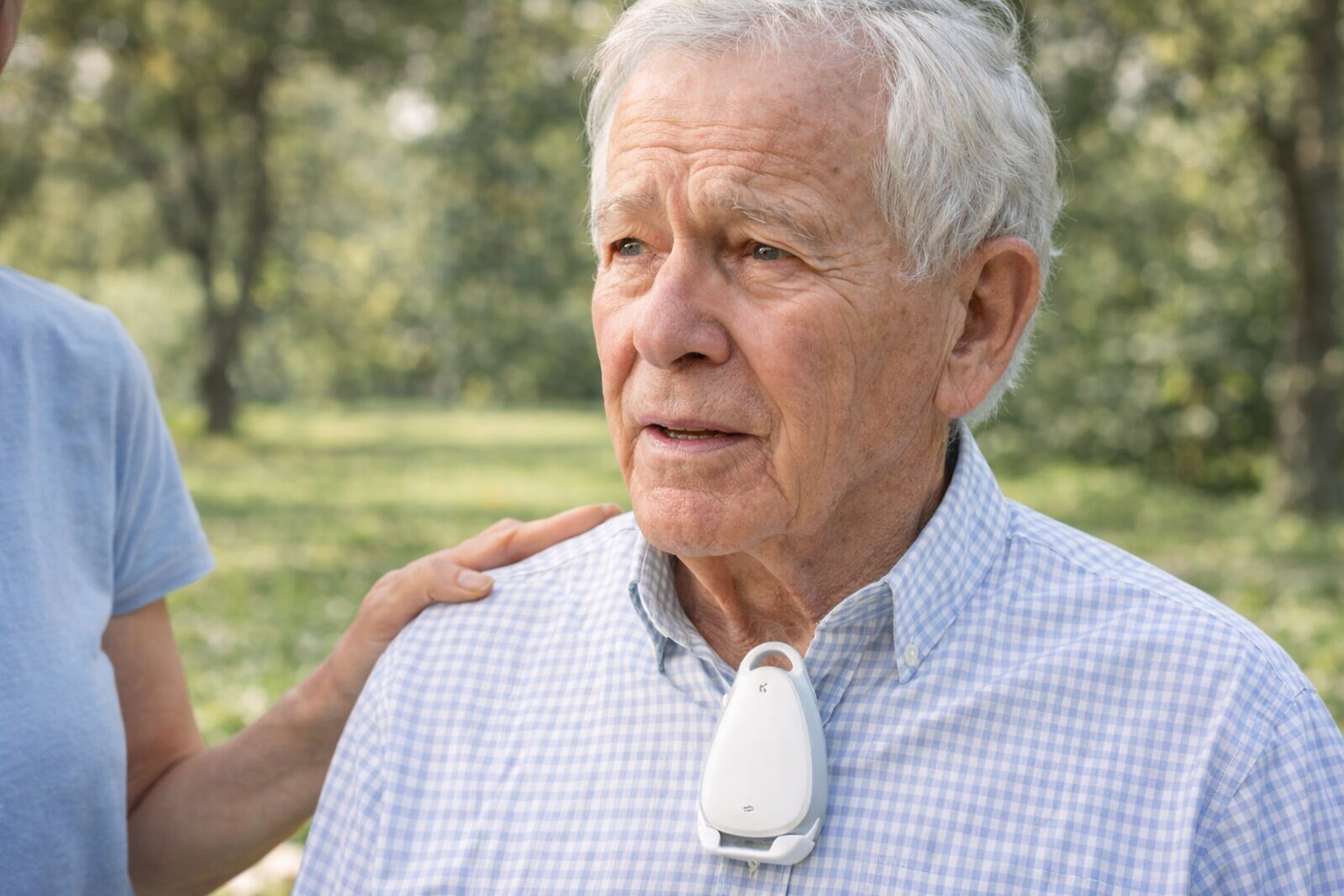
Wandering is one of the most concerning safety risks for families caring for seniors with dementia or memory challenges. Even in familiar neighborhoods, confusion, disorientation, or impulsive walking can quickly become dangerous.
The best GPS trackers for seniors provide a practical layer of safety. They allow caregivers and family members to monitor location in real time, set safe-zone alerts, and respond quickly if a senior leaves a designated area.
The best GPS trackers for seniors with dementia combine:
- Real-time location tracking
- Geofencing alerts
- Simple design
- Comfortable wearability
- Long battery life
This guide reviews GPS trackers suitable for seniors, comparing wearable devices, clip-on trackers, and discreet tracking options.
We also recommend checking out our guide on the Best Stand-Assist Couch Handles for Low Sofas.
Table of Contents
Affiliate Disclosure: As an Amazon Associate, we may earn a commission from qualifying purchases at no additional cost to you.
Why GPS Tracking Can Improve Safety
The best GPS trackers for seniors do not prevent wandering, but they significantly improve response time and visibility.
Common benefits include:
- Real-time location monitoring
- Safe-zone alerts when someone leaves a preset area
- Location history review
- Emergency SOS functions
- Reduced caregiver stress
For seniors who value independence but require oversight, GPS devices offer a middle ground between freedom and protection.
Best GPS Trackers for Seniors with Dementia
1. AngelSense GPS Tracker – Best Overall for Dementia Safety

AngelSense is widely recognized as one of the most advanced GPS tracking systems designed for vulnerable individuals. While originally developed for children with special needs, it has become a top choice for seniors with memory-related conditions.
Unlike simple Bluetooth trackers, AngelSense uses real-time cellular GPS tracking. It includes geofencing capabilities, allowing caregivers to define safe zones such as home, a neighborhood radius, or assisted living grounds. If the senior leaves the designated area, instant alerts are sent.
A standout feature is the two-way voice capability. Caregivers can speak directly through the device, which can be reassuring during disorientation.
Battery life typically lasts a full day with continuous tracking.
Why it stands out:
- Real-time GPS tracking
- Geofencing alerts
- Two-way voice communication
- Location history
- Designed for vulnerable individuals
Best for:
Families seeking comprehensive tracking with real-time alerts and communication features.
2. LandAirSea 54 GPS Tracker – Best Discreet Tracking Option

The LandAirSea 54 is a compact magnetic GPS tracker that can be discreetly placed in a pocket, purse, walker pouch, or attached to mobility devices.
It provides real-time tracking via a smartphone app, with location updates every few seconds. The device is waterproof and small enough to remain unobtrusive.
Because it does not function as a wearable device, it works best when attached to something the senior consistently carries — such as a rollator bag or mobility scooter.
Why it’s practical:
- Small and discreet
- Strong magnetic case
- Real-time tracking
- Waterproof design
- Long standby battery life
Best for:
Situations where discreet placement is preferred over wearable devices.
3. SecuLife GPS Tracker – Best Medical-Style Wearable

SecuLife offers a wearable GPS tracker designed specifically for seniors. It can be worn as a wristband, pendant, or clipped device.
The SOS button feature allows seniors to signal for assistance if needed. It also includes geofencing and real-time tracking.
Its simplified interface and wearable design make it well-suited for assisted living settings.
Why it’s useful:
- Designed with seniors in mind
- SOS alert function
- Geofencing alerts
- Wearable options
- Reliable real-time tracking
Best for:
Families who prefer a wearable medical-style tracking solution.
4. Apple AirTag (with Holder) – Best Budget Supplement Option

The Apple AirTag is not a real-time GPS device in the traditional sense, but can function as a location tool within Apple’s Find My network.
When attached to a walker, purse, or clothing with a secure holder, it can help locate a senior if they are within range of Apple devices. It does not provide constant live tracking like cellular GPS trackers, but can be a low-cost supplemental option.
It works best in populated areas where other Apple devices are nearby.
Why it’s accessible:
- Affordable
- Easy setup
- Long battery life
- Compact size
Best for:
Urban environments as a secondary tracking solution.
Important Features to Look For
1. Real-Time GPS (Not Just Bluetooth)
Bluetooth trackers have a limited range. The best GPS trackers for seniors use cellular networks for wider coverage.
2. Geofencing
Allows caregivers to set safe boundaries and receive alerts.
3. Battery Life
Daily charging is typical. Multi-day battery life reduces maintenance.
4. Wearability
The device must be comfortable and secure.
5. Subscription Costs
Many real-time GPS devices require monthly service plans.
Wearable vs. Hidden Trackers
Wearable Devices
- More reliable location tracking
- Often includes SOS features
- Must be worn consistently
Hidden Trackers
- Discreet
- Placed in bags or walkers
- Risk of being left behind
Choosing between them depends on the senior’s habits and level of supervision.
Common Mistakes to Avoid
- Choosing Bluetooth-only trackers for high-risk wandering
- Ignoring subscription fees
- Selecting devices with poor battery life
- Choosing devices that are uncomfortable to wear
- Relying solely on tracking without supervision
Privacy & Ethical Considerations
The best GPS trackers for seniors should always be used respectfully and in the best interest of safety. Whenever possible, seniors should be aware of the device and its purpose.
The goal is safety and independence, not surveillance.
Final Thoughts
The best GPS trackers for seniors with dementia provide families with peace of mind while allowing seniors to maintain independence.
For comprehensive safety features, AngelSense remains one of the strongest options. For discreet placement, the LandAirSea 54 offers flexibility. Wearable solutions like Jiobit and SecuLife provide a balance between comfort and real-time tracking.
Choosing the right device depends on mobility level, supervision needs, and comfort preferences, but any of these options can significantly improve response time if a senior becomes disoriented.
Was this article helpful? Read one of these next:


Leave a Reply