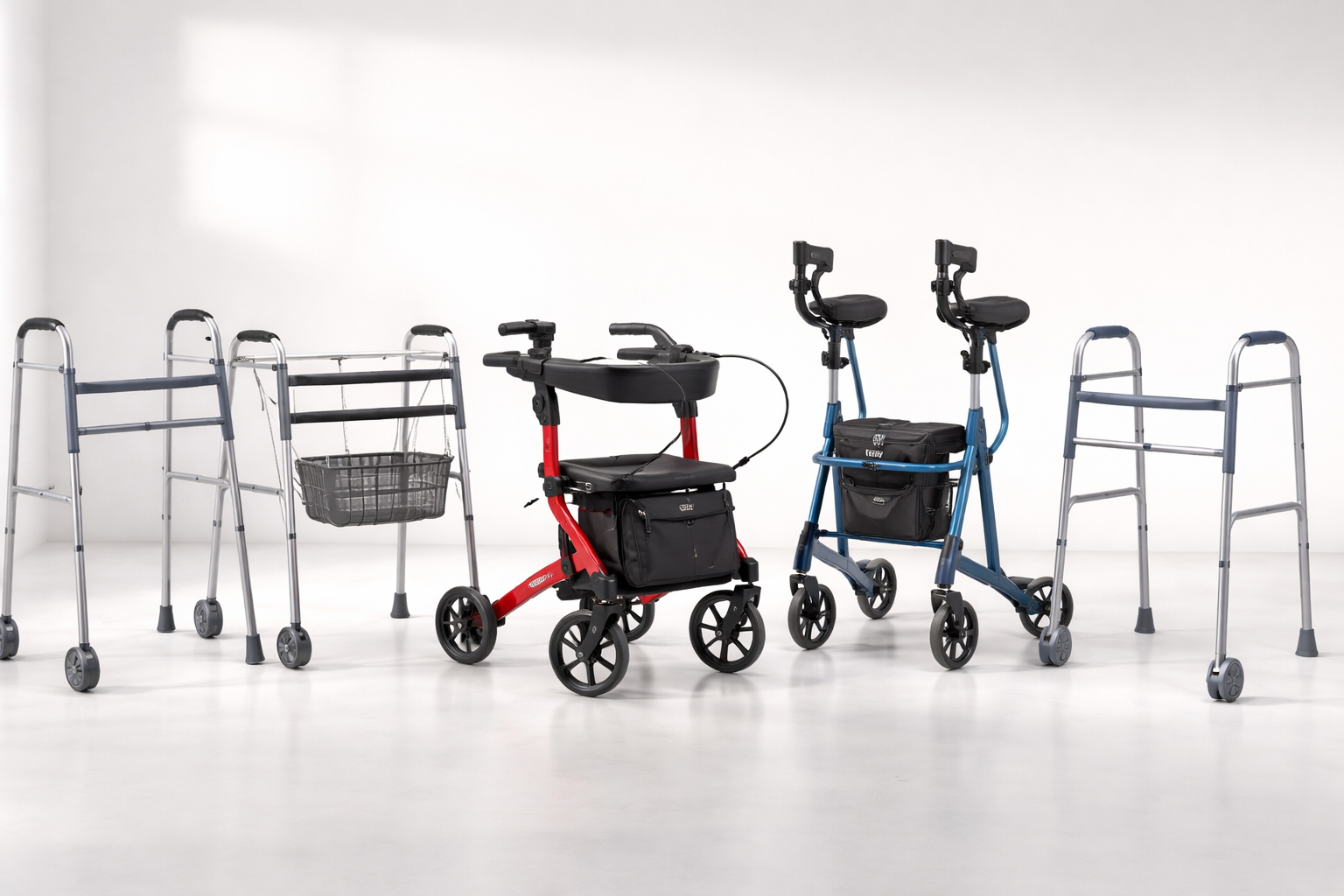
Balance changes are one of the most common challenges seniors face as they age. Whether caused by muscle weakness, joint pain, neurological conditions, dizziness, or simple loss of confidence, stability issues can turn everyday walking into a source of stress or risk.
The right walker can make a dramatic difference.
A well-chosen walker doesn’t just prevent falls, it restores confidence, encourages movement, and allows seniors to remain independent longer. But not all walkers provide the same level of stability. Some are designed for light support, while others offer maximum balance control for those who feel unsteady even on flat surfaces.
This guide breaks down the best walkers for seniors with stability issues, focusing on real-world safety, comfort, and ease of use, both indoors and outdoors. Every recommendation below is based on stability performance first, with Amazon-available models you can easily find and compare.
We also recommend reading our guide on the Best Travel Mobility Scooters for Seniors.
Table of Contents
Affiliate Disclosure: As an Amazon Associate, we may earn a commission from qualifying purchases at no additional cost to you.
What Stability Issues Mean for Walker Selection
Before choosing one of the best walkers for seniors with stability issues, it’s important to understand what “stability issues” actually involve. Seniors may experience:
- Unsteady gait or wobbling while walking
- Difficulty turning or stopping
- Weak legs or reduced muscle strength
- Balance loss when standing from a seated position
- Fear of falling that leads to hesitation
- Neurological conditions affecting coordination
For these users, stability is more important than speed or portability. Walkers designed for stability typically feature:
- Wider frames
- Four points of ground contact
- Larger wheels or non-slip tips
- Strong braking systems
- Heavier or reinforced frames
Types of Walkers Best for Stability
Not all walkers are appropriate for stability challenges. Below is a quick overview of which types generally work best:
- Standard 4-leg walkers – maximum stability, slower movement
- Front-wheel walkers – balance support with easier motion
- Rollators with seats – good stability if brakes are strong and wheels are large
- Heavy-duty walkers – best for plus-size or very unsteady users
- Upright walkers – stability plus posture support (for some users)
Now, let’s look at the best walkers for seniors that perform well for those who need reliable balance support.
1. Drive Medical Deluxe Two-Button Folding Walker – Best Overall for Maximum Stability

The Drive Medical Deluxe Folding Walker is one of the best walkers for seniors with balance concerns, and for good reason. This classic design provides four solid contact points with the floor, creating exceptional stability while walking or standing.
Unlike rollators, this walker doesn’t roll unless the user intentionally lifts and moves it, which helps prevent unexpected movement. The aluminum frame is lightweight but sturdy, and the two-button folding mechanism makes it easy to store or transport without sacrificing rigidity.
Rubber tips on each leg provide excellent traction on indoor floors, while optional glide caps can be added for smoother movement without reducing control.
Why it’s excellent for stability:
- Four stationary legs provide maximum balance support
- Lightweight aluminum frame doesn’t feel flimsy
- Height-adjustable for proper posture
- Easy to control pace and movement
- Trusted design used by therapists and rehab facilities
Best for: Seniors with significant balance issues who prioritize safety over speed.
2. Drive Medical Front-Wheel Walker – Best Balance Support with Easier Movement

For seniors who need strong stability but struggle with lifting a standard walker, a front-wheel walker can be an ideal compromise. The Drive Medical Front-Wheel Walker features two wheels in the front and two rubber tips in the back, allowing smoother forward movement while maintaining rear braking control.
The front wheels glide forward, while the rear legs stay grounded until lifted, offering stability without forcing users to fully lift the walker each step. This is especially helpful for seniors with limited arm strength or shoulder pain.
The walker maintains a wide frame and adjustable height, ensuring proper fit and posture. Optional rear glide caps can further customize movement speed.
Why it’s one of the best walkers for seniors:
- Easier movement than a standard walker
- Rear legs prevent runaway motion
- Excellent for indoor and flat outdoor surfaces
- Maintains strong balance control
- Lightweight and easy to fold
Best for: Seniors with balance issues who want more fluid movement without sacrificing control.
3. Medline Heavy-Duty Bariatric Walker – Best for Severe Stability Concerns

For seniors who need maximum support, the Medline Heavy-Duty Bariatric Walker is one of the most stable walkers available. Designed with a reinforced steel frame and wider stance, this walker offers exceptional balance control and weight distribution.
Even for non-bariatric users, the extra width and solid construction can feel more secure than standard walkers. The walker remains stable during standing transitions, turning, and pauses, which is critical for seniors who feel unsteady when changing direction.
Despite its heavy-duty construction, the walker still folds for storage and features height adjustment to ensure proper posture.
Why it’s one of the best walkers for seniors:
- Extra-wide frame improves balance
- Reinforced steel construction
- Very high weight capacity
- Excellent support when standing or turning
- Minimal flex or wobble
Best for: Seniors with severe balance challenges, plus-size users, or anyone who needs the most stable option available.
4. Drive Medical Nitro Euro Rollator – Best Rollator for Stability Issues

Not all rollators are suitable for stability issues, but the Drive Medical Nitro stands out. With large 10-inch front wheels, a wide frame, and strong hand brakes, it offers better stability than many lightweight rollators.
The Nitro provides continuous support while walking and includes a built-in seat for resting, which can be crucial for seniors who become fatigued or dizzy. Its braking system is responsive and easy to engage, helping prevent rolling accidents.
Unlike budget rollators, the Nitro’s frame feels solid rather than flimsy, and the wider wheelbase improves balance during turns.
Why it‘s one of the best walkers for seniors with stability issues (when used properly):
- Large wheels handle uneven surfaces better
- Strong hand brakes for control
- Built-in seat for rest breaks
- Stable frame compared to lightweight rollators
- Good indoor and outdoor performance
Best for: Seniors with moderate stability issues who need mobility plus rest options.
5. NOVA Traveler 3-Wheel Walker – Best for Indoor Stability in Tight Spaces

For seniors living in apartments or homes with narrow hallways, the NOVA Traveler 3-Wheel Walker offers stability in a compact design. While not as stable as a four-leg walker, its triangular shape provides better balance than a cane and allows tight turning.
The front wheel pivots easily, and the rear wheels remain stable when brakes are engaged. This walker is especially useful indoors where space is limited and constant turning is required.
Why it works indoors:
- Compact design fits narrow spaces
- Lightweight and easy to maneuver
- Better stability than a cane
- Hand brakes add control
- Storage pouch included
Best for: Indoor use where space constraints matter more than maximum support.
6. OasisSpace Upright Walker – Best for Stability with Posture Support

Upright walkers are designed to promote a more natural posture, which can indirectly improve stability for some seniors. The OasisSpace Upright Walker features forearm supports that distribute weight more evenly and reduce forward hunching.
This model includes large wheels, ergonomic hand brakes, and a wide stance that helps users feel grounded. However, upright walkers are best for seniors who still have decent balance but need posture assistance — not for those with severe instability.
Why it helps certain users:
- Encourages upright posture
- Reduces strain on wrists and shoulders
- Large wheels improve outdoor stability
- Stable frame for walking confidence
Best for: Seniors with mild to moderate stability issues and posture-related balance concerns.
7. Vive Folding Walker with Wheels – Best Lightweight Stability Option

The Vive Folding Walker combines stability with portability, making it a good option for seniors who travel or move between locations. It includes front wheels for smoother movement while maintaining rear stability tips.
The walker’s folding design is easy to manage, and the frame feels solid without being heavy. While not ideal for severe balance problems, it offers dependable support for everyday walking.
Why it’s useful:
- Lightweight but stable
- Easy to fold and transport
- Front wheels reduce effort
- Adjustable height
- Affordable and widely available
Best for: Seniors with mild to moderate stability issues who need portability.
How to Choose the Best Walkers for Seniors with Stability Issues
1. Frame Width
Wider frames = better balance.
2. Wheel Type
- No wheels or rear tips = maximum control
- Large wheels = better outdoor stability
3. Weight Capacity
Always choose a walker rated above the user’s weight.
4. Brakes
If using a rollator, brakes must be easy to engage and reliable.
5. Indoor vs Outdoor Use
Indoor walkers prioritize control; outdoor walkers need larger wheels.
Safety Tips for Using Walkers with Stability Issues
- Adjust height correctly, wrists should align with handles
- Use non-slip footwear
- Avoid leaning too far forward
- Lock brakes before sitting
- Replace worn rubber tips regularly
Final Thoughts
Choosing the best walker for seniors with stability issues is about confidence, safety, and independence. The right walker reduces fall risk, encourages movement, and helps seniors stay active without fear.
Whether that means a classic four-leg walker, a front-wheel design, a heavy-duty model, or a carefully chosen rollator, there is a safe solution for nearly every stability challenge.
Did you find this article helpful? Read one of these next:
Leave a Reply